CMF in Practice
Systems, Constraints, and Scale
Senior CMF Design Lead
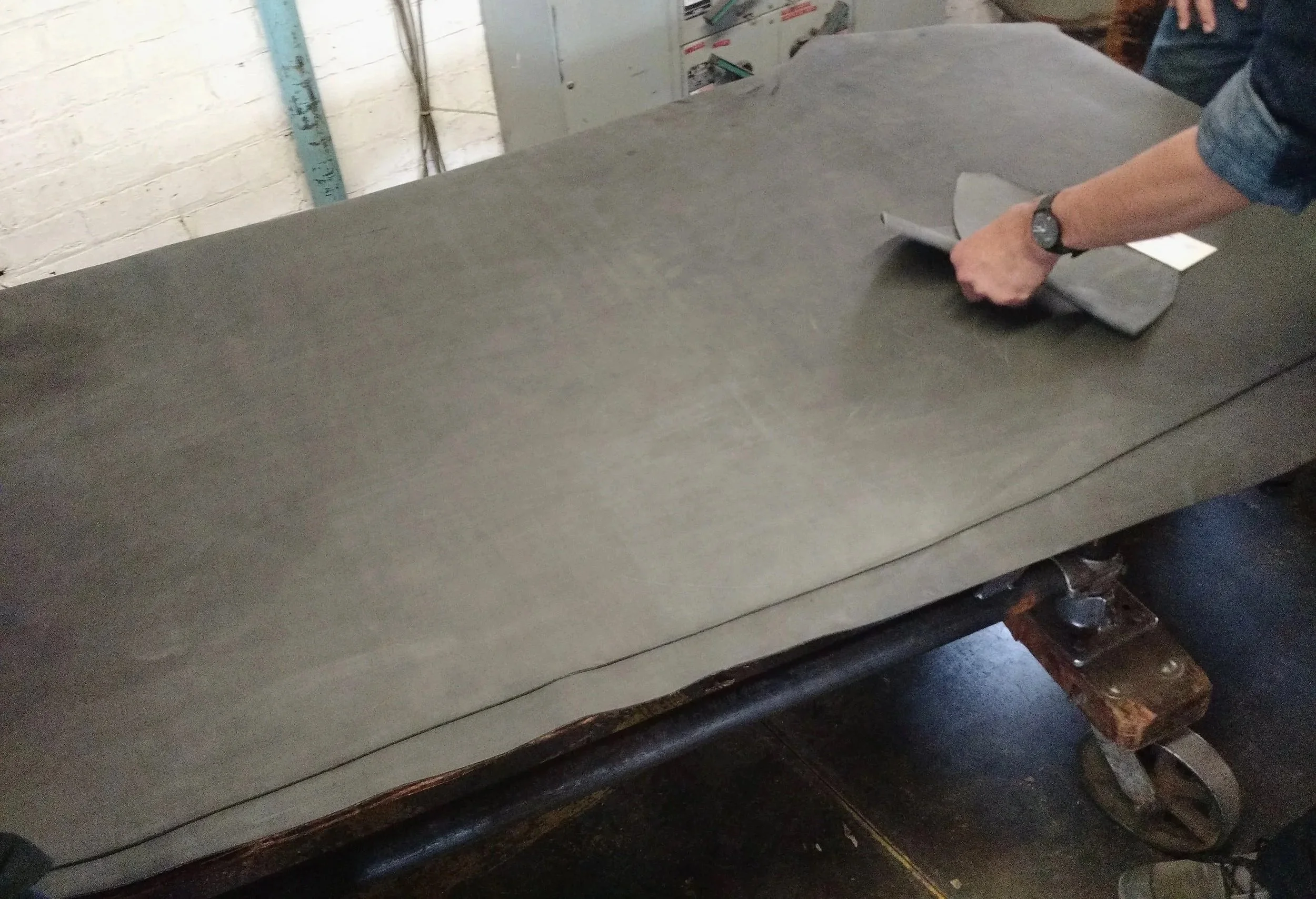
Evaluating material behavior, durability, and surface quality at scale.
CMF shapes trust, usability, and perception before a product is ever touched. My work spans consumer products, retail environments, and brand systems — each with distinct constraints around scale, durability, lead times, and manufacturing complexity.
Rather than designing for a single form factor, I approach CMF as a transferable discipline. I translate material, color, and finish intent across platforms, processes, and timelines, while keeping decisions clear, consistent, and human-centered.
This body of work highlights how CMF thinking adapts across contexts — scaling into new form factors, longer development cycles, and the demands of future mobility systems.
CMF guides every interaction — from first glance to to lasting impression.
Upstream CMF & Futures Thinking
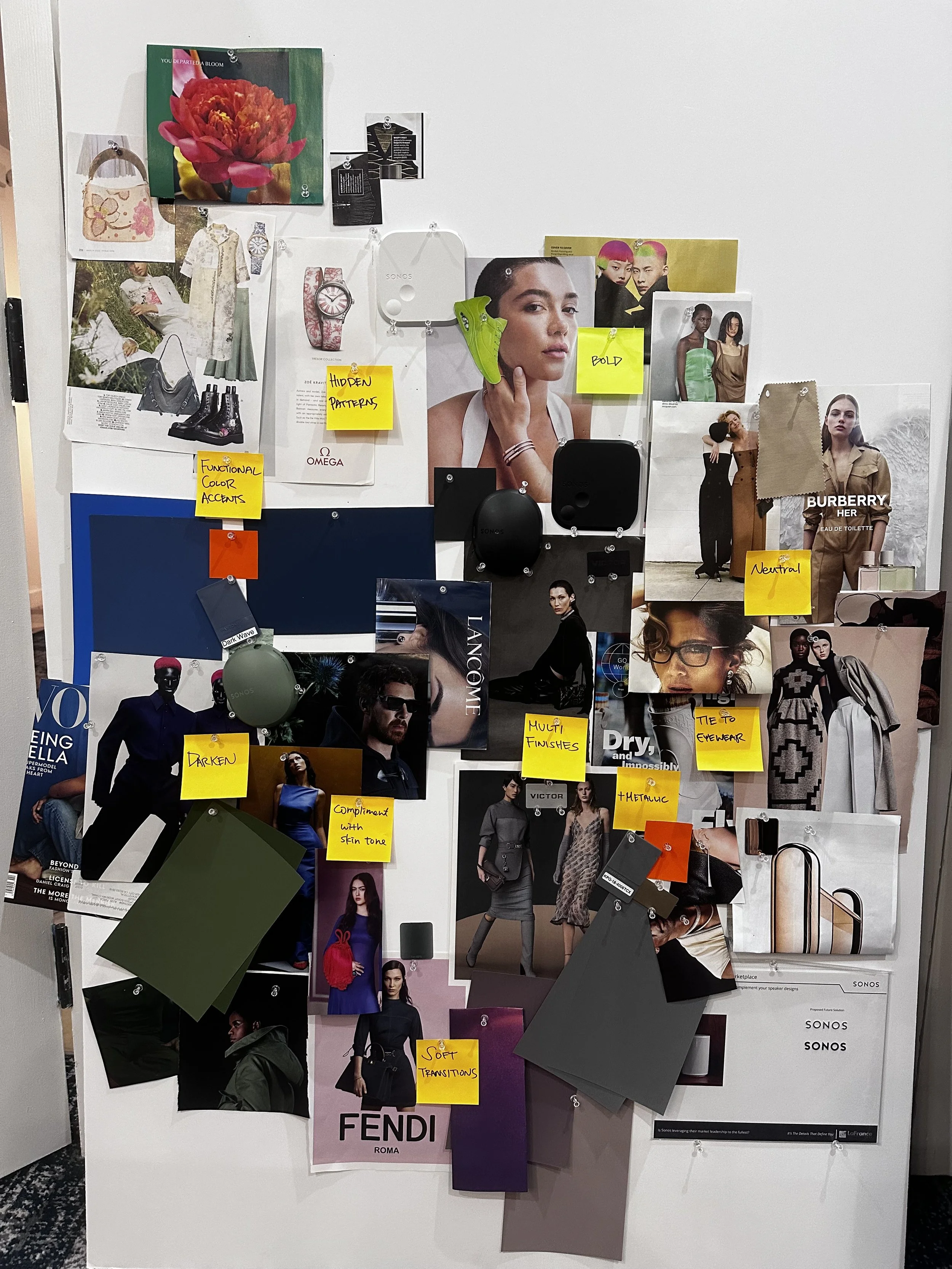
Upstream CMF work goes beyond immediate products. I lead trend research, trade show reporting, and inspiration gathering to identify materials and colors that are resilient over time.
Rather than chasing short-term aesthetics, this phase focuses on behaviors — how materials age, how finishes wear, and how color performs in real environments.
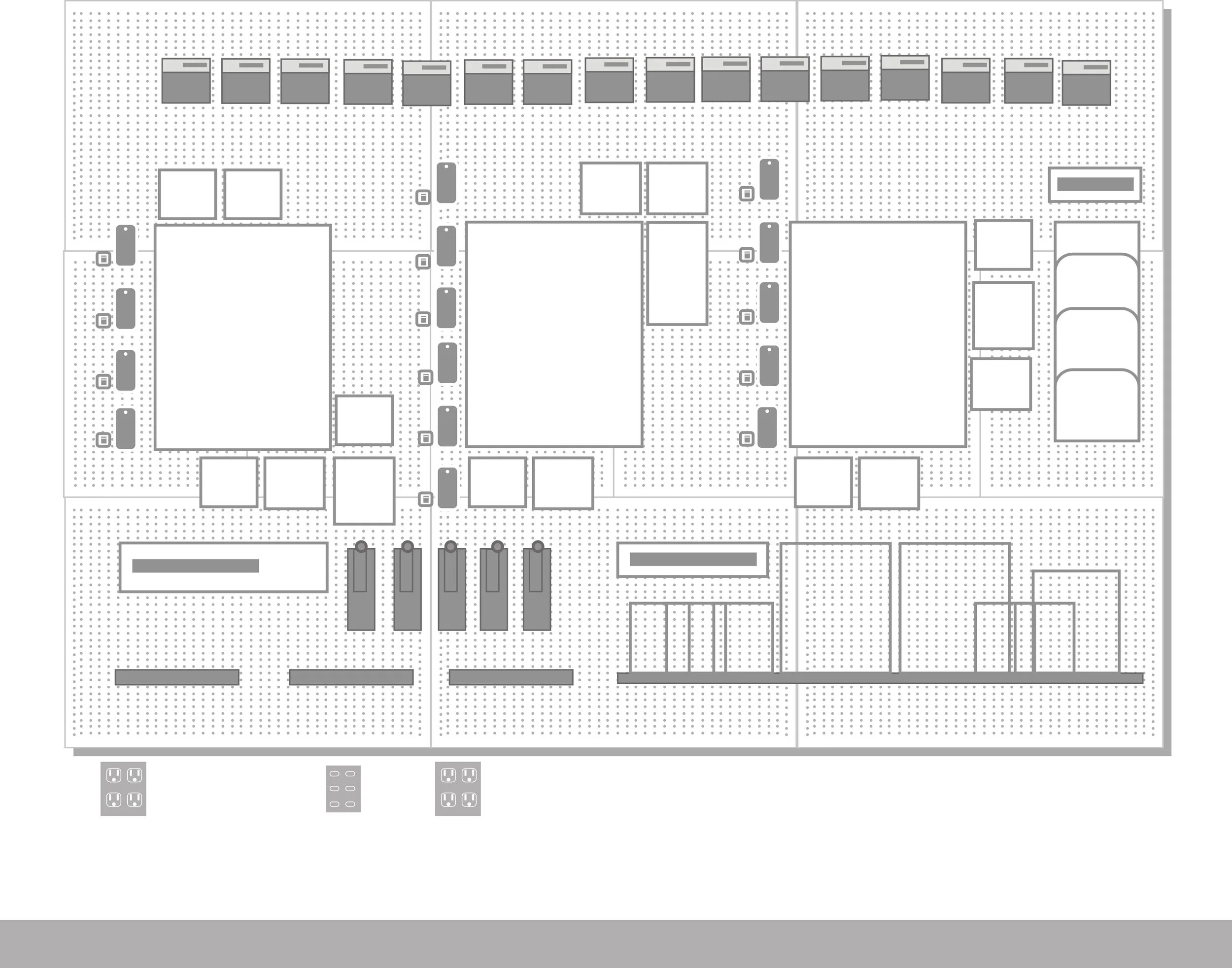
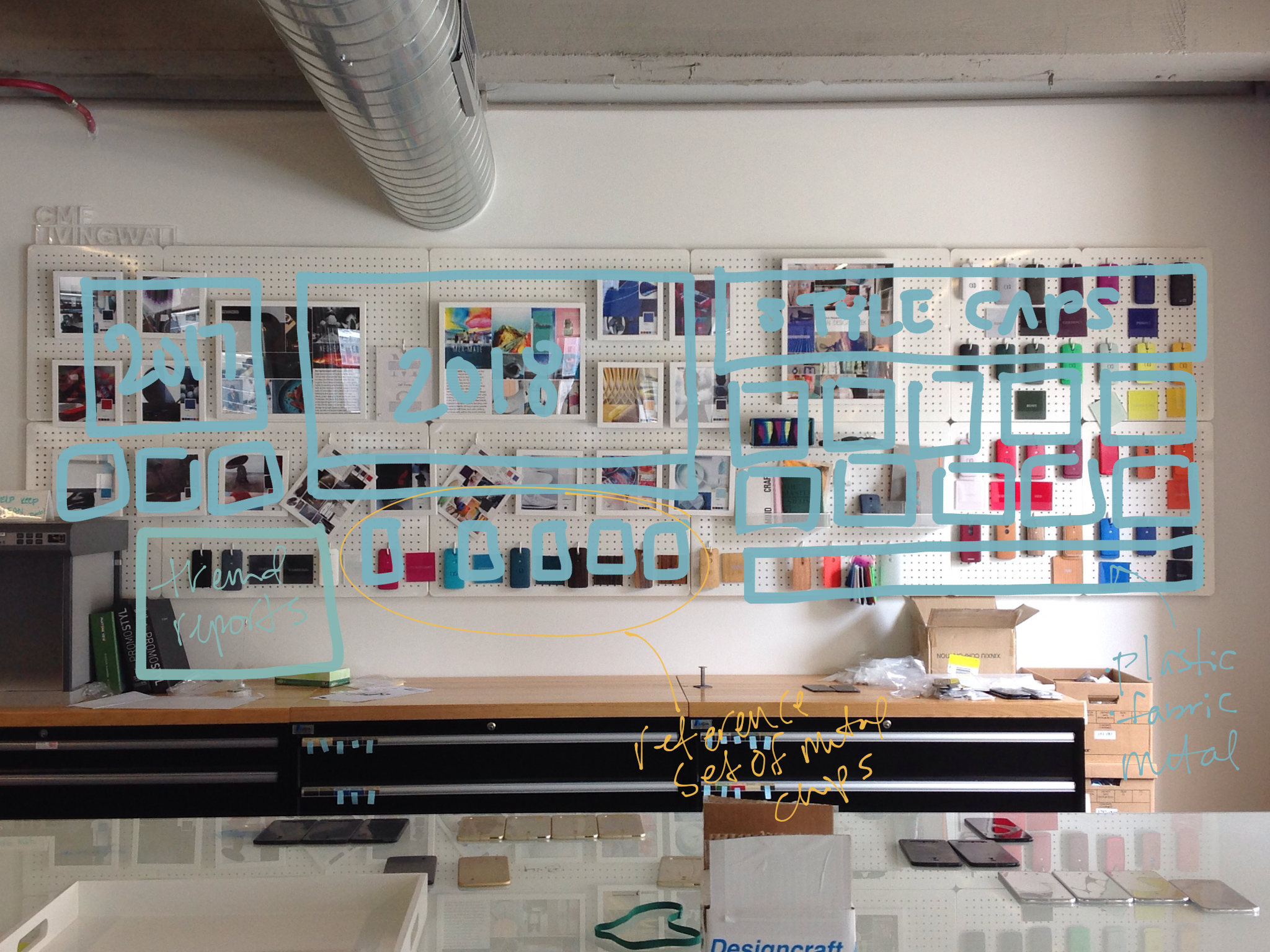
Living wall displays and early explorations allow ideas to be evaluated spatially and tactically, creating a foundation for long development horizons and evolving technologies.
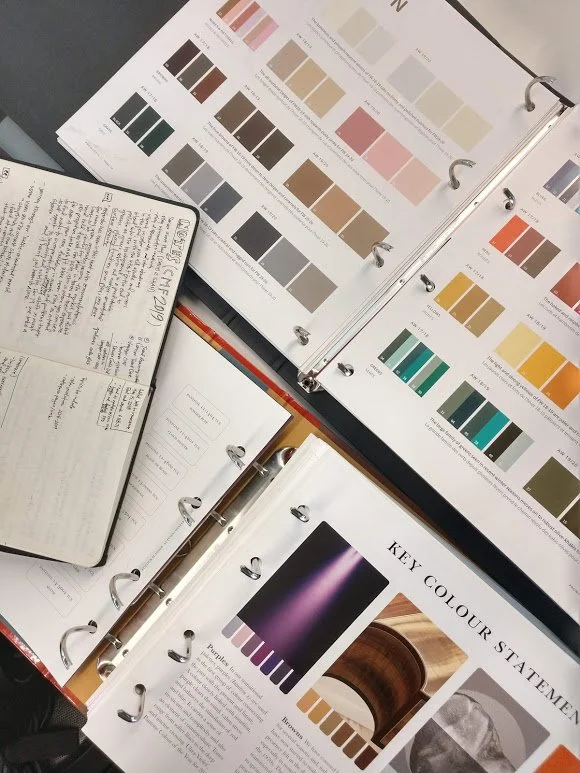
Identifying durable CMF signals across platforms and timelines.
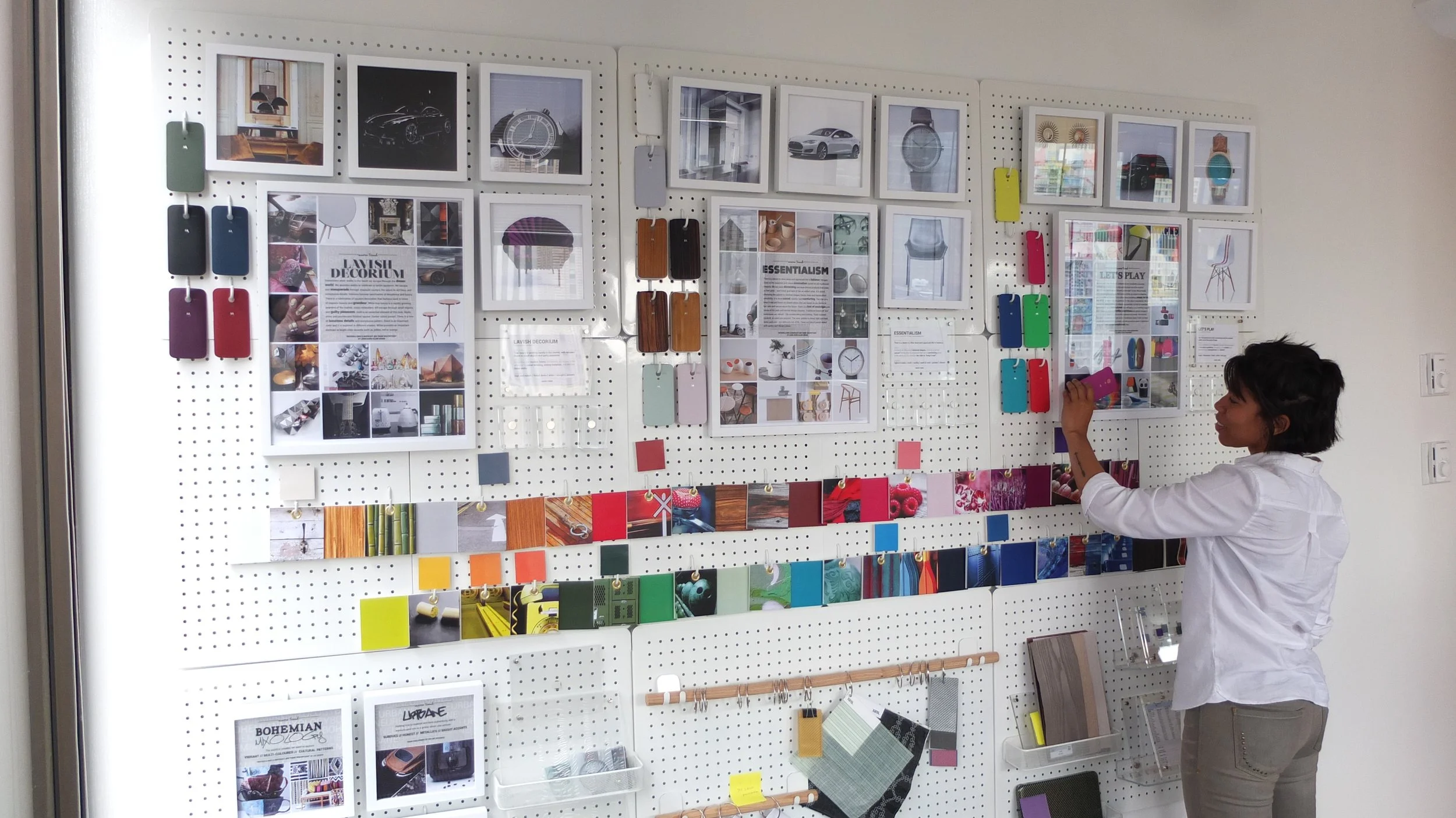
Living CMF displays used to test adjacency, hierarchy, and interaction.
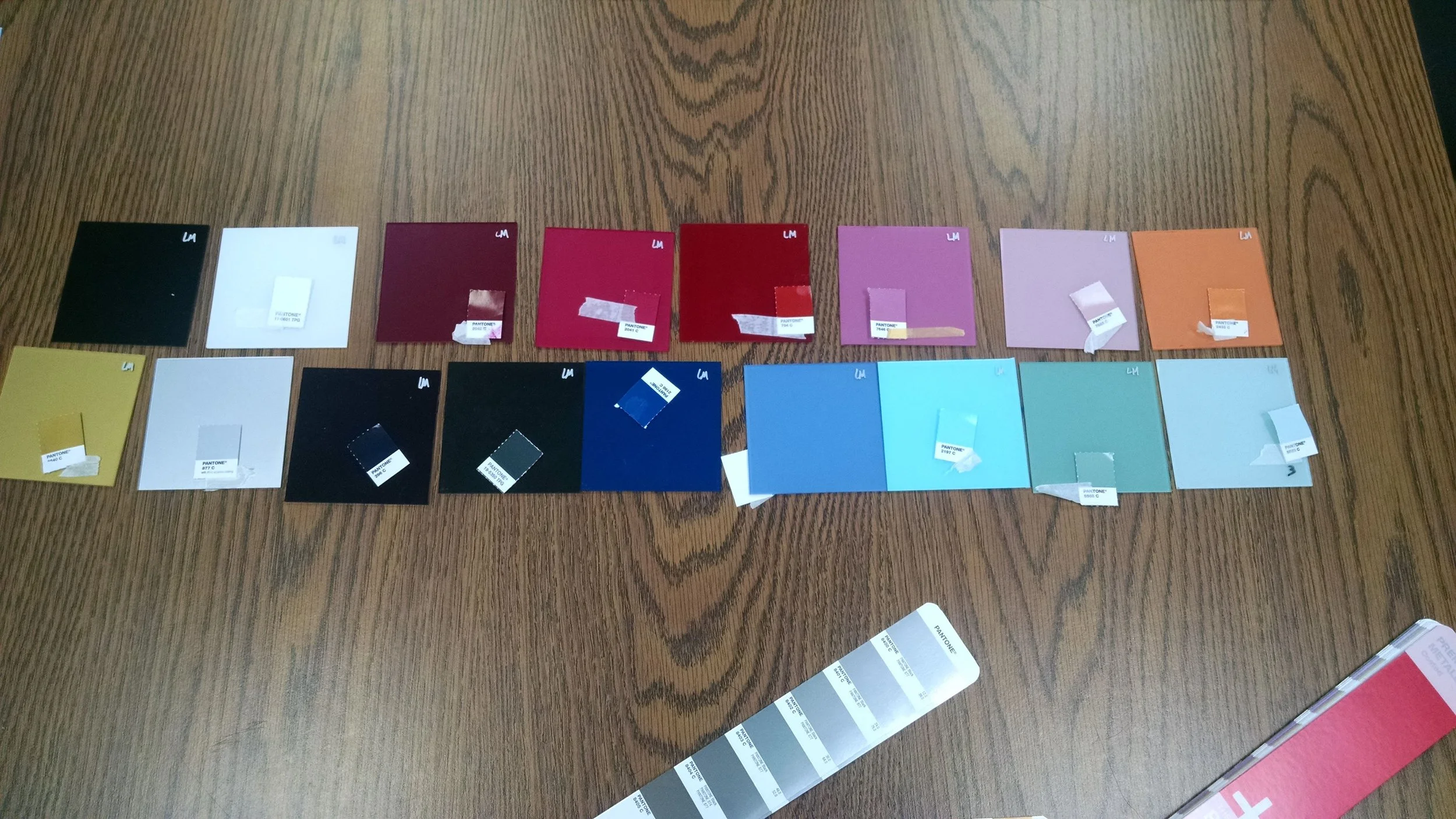
Inspiration grounded in material behavior, tactility, and aging.
The right material decisions today define experiences years from now.
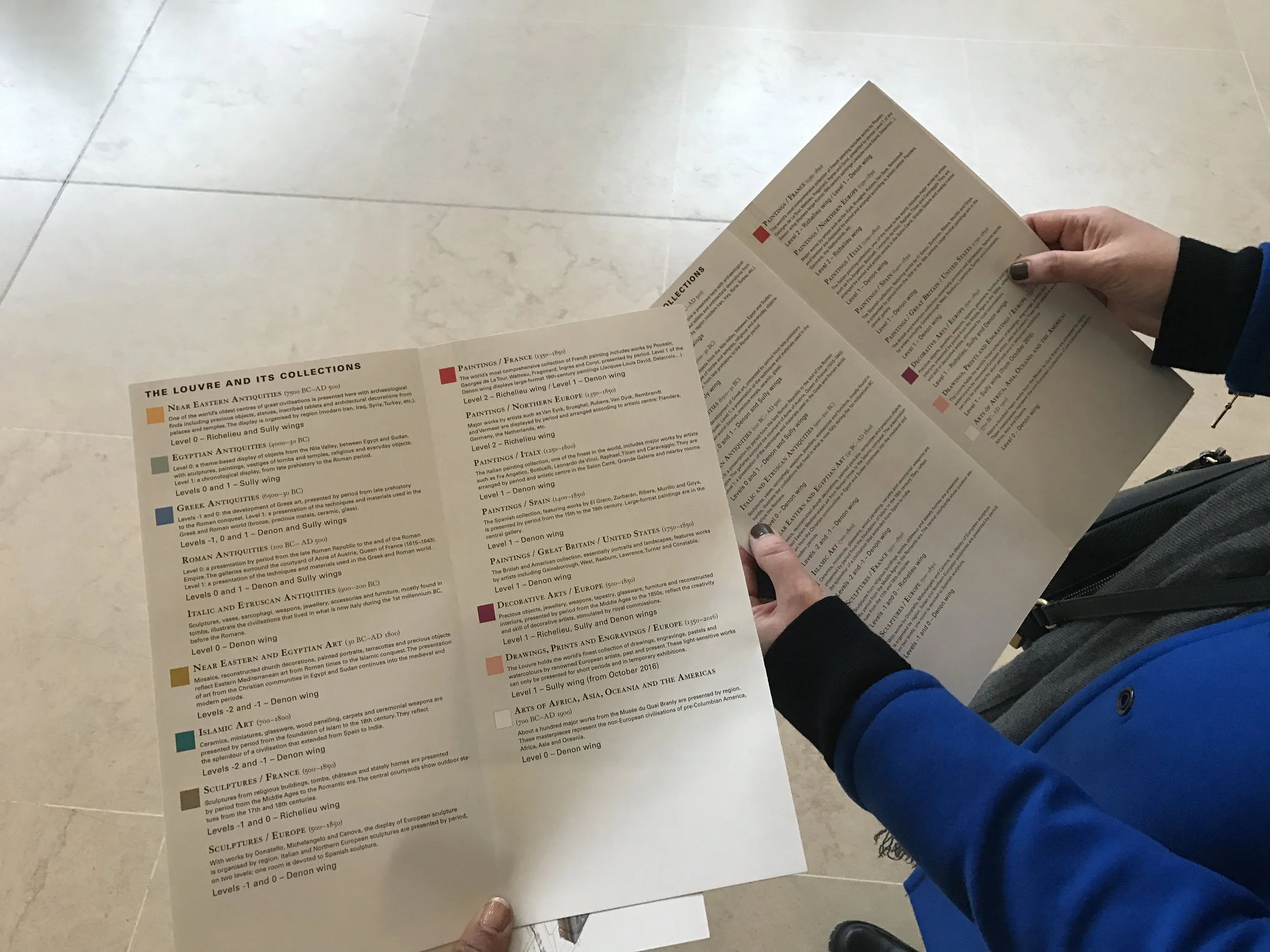
Material & Color Systems Strategy
Turning insight into reality requires CMF systems, not one-off selections. Across projects, I’ve managed material libraries, palette frameworks, tolerance ranges, and standards that ensure consistency across teams and regions.
This includes international color matching, tolerance alignment, and detailed documentation to protect CMF intent as programs scale. These systems allow teams to move faster without sacrificing clarity, quality, or cohesion.
Systems make CMF repeatable, reliable, and resilient at scale.
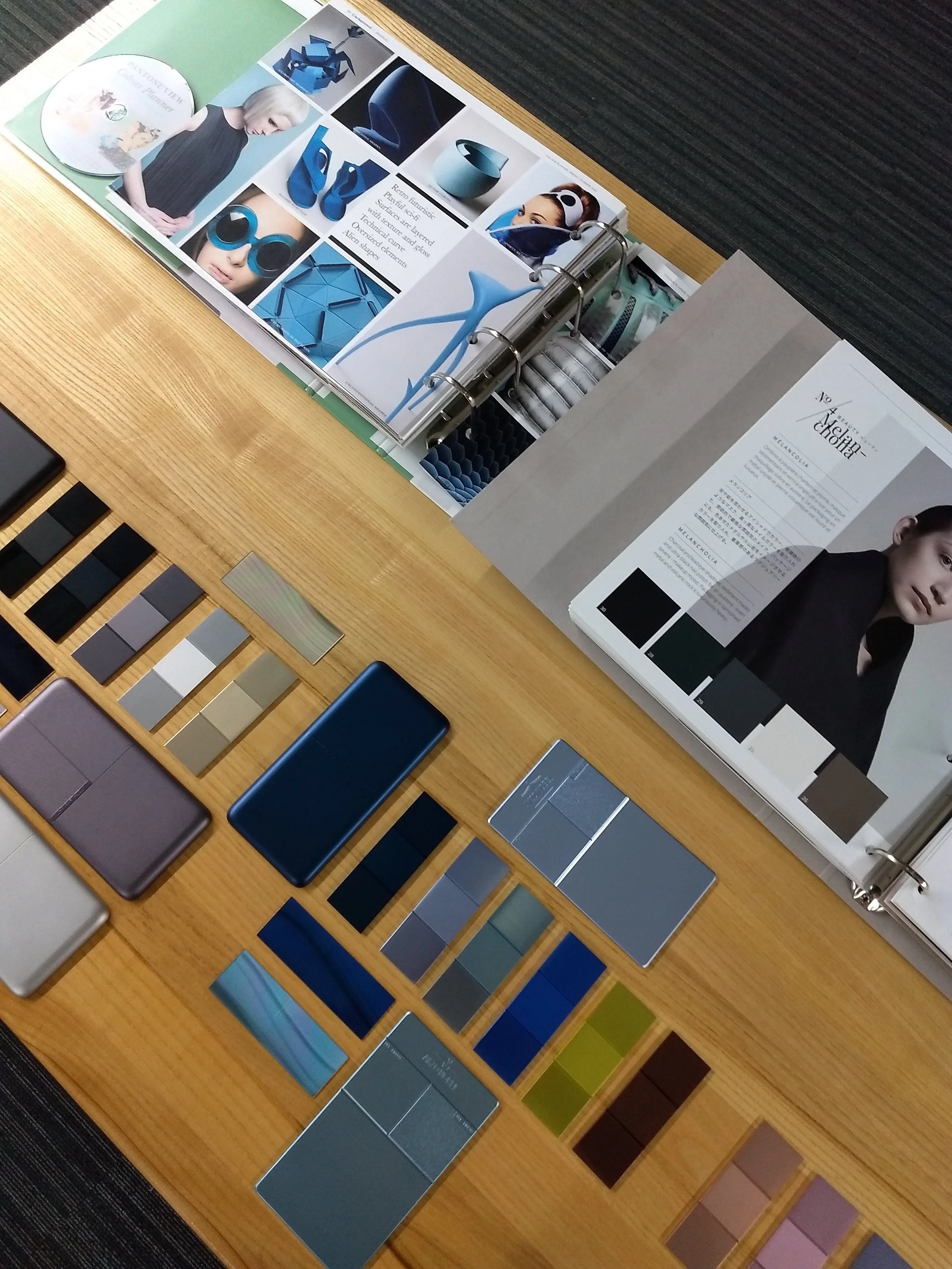
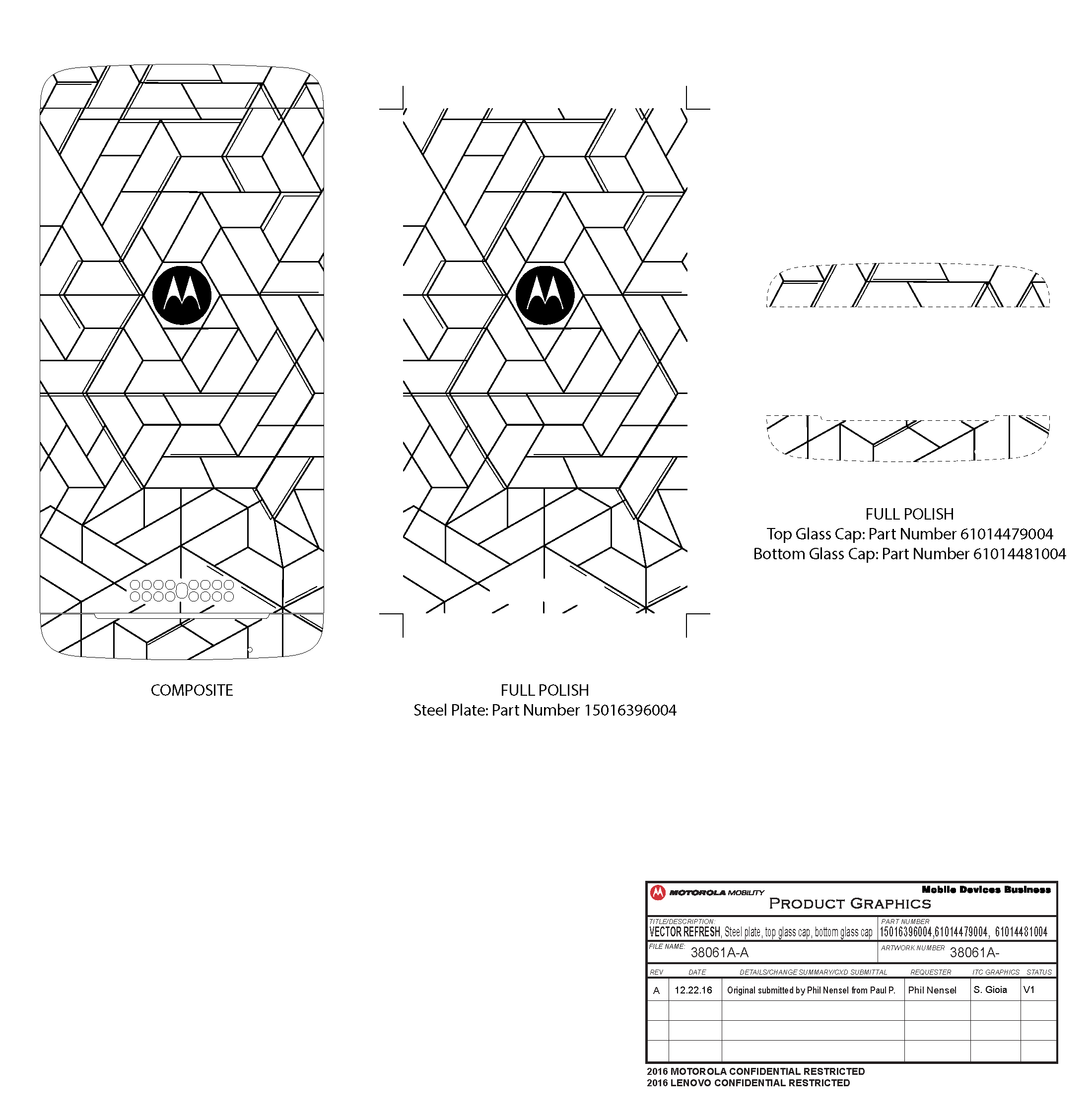
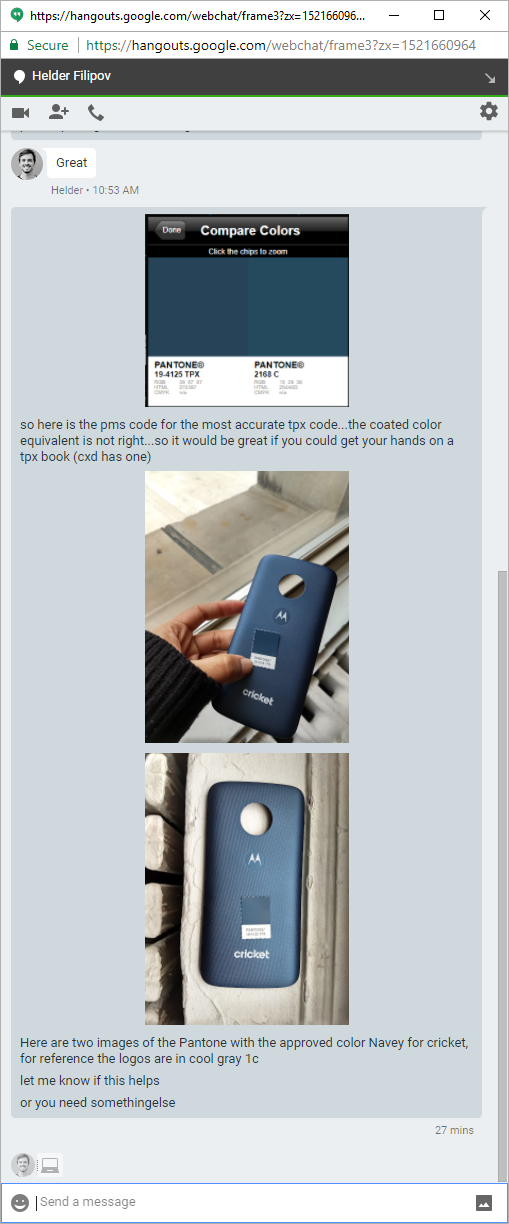
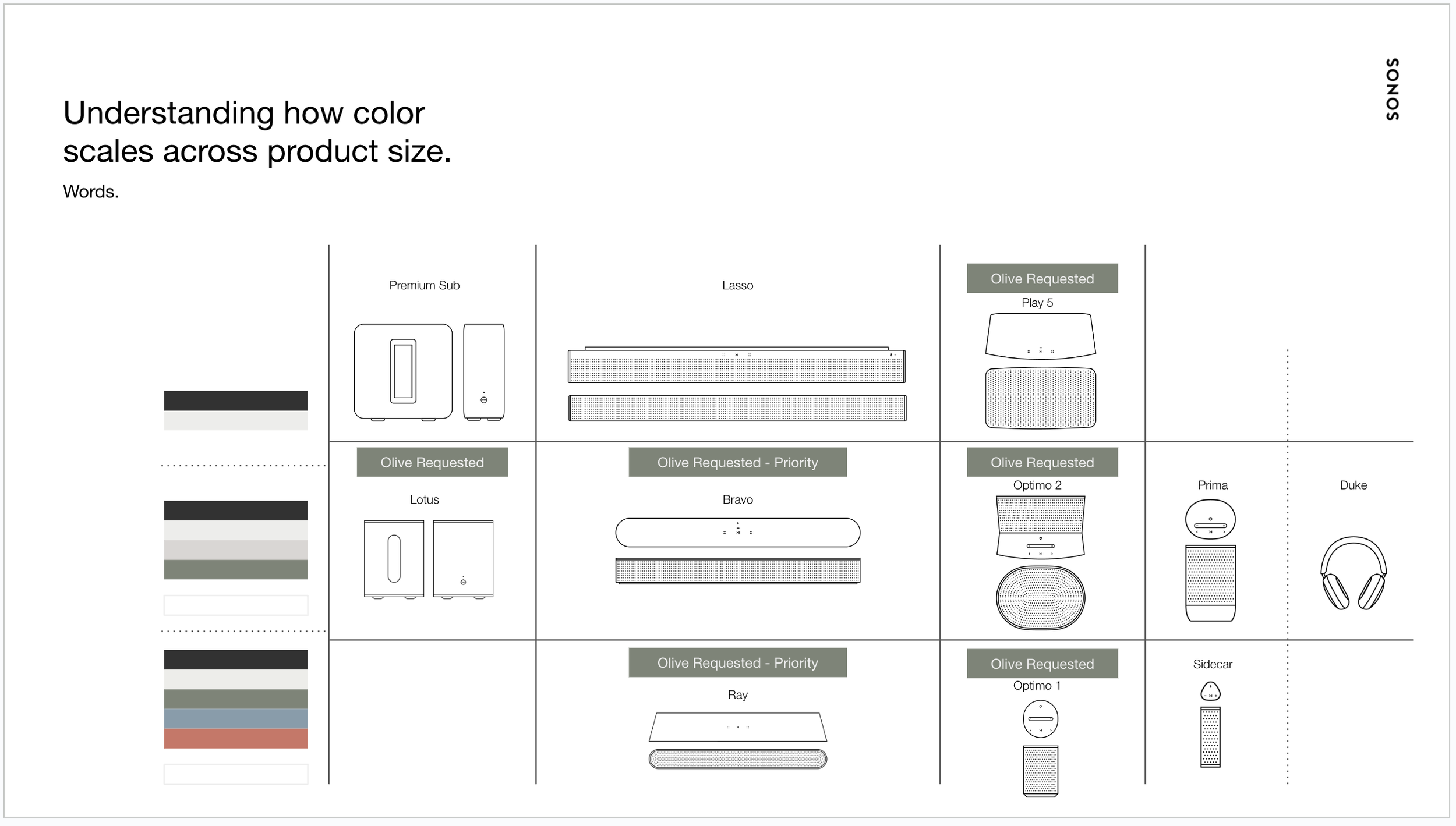
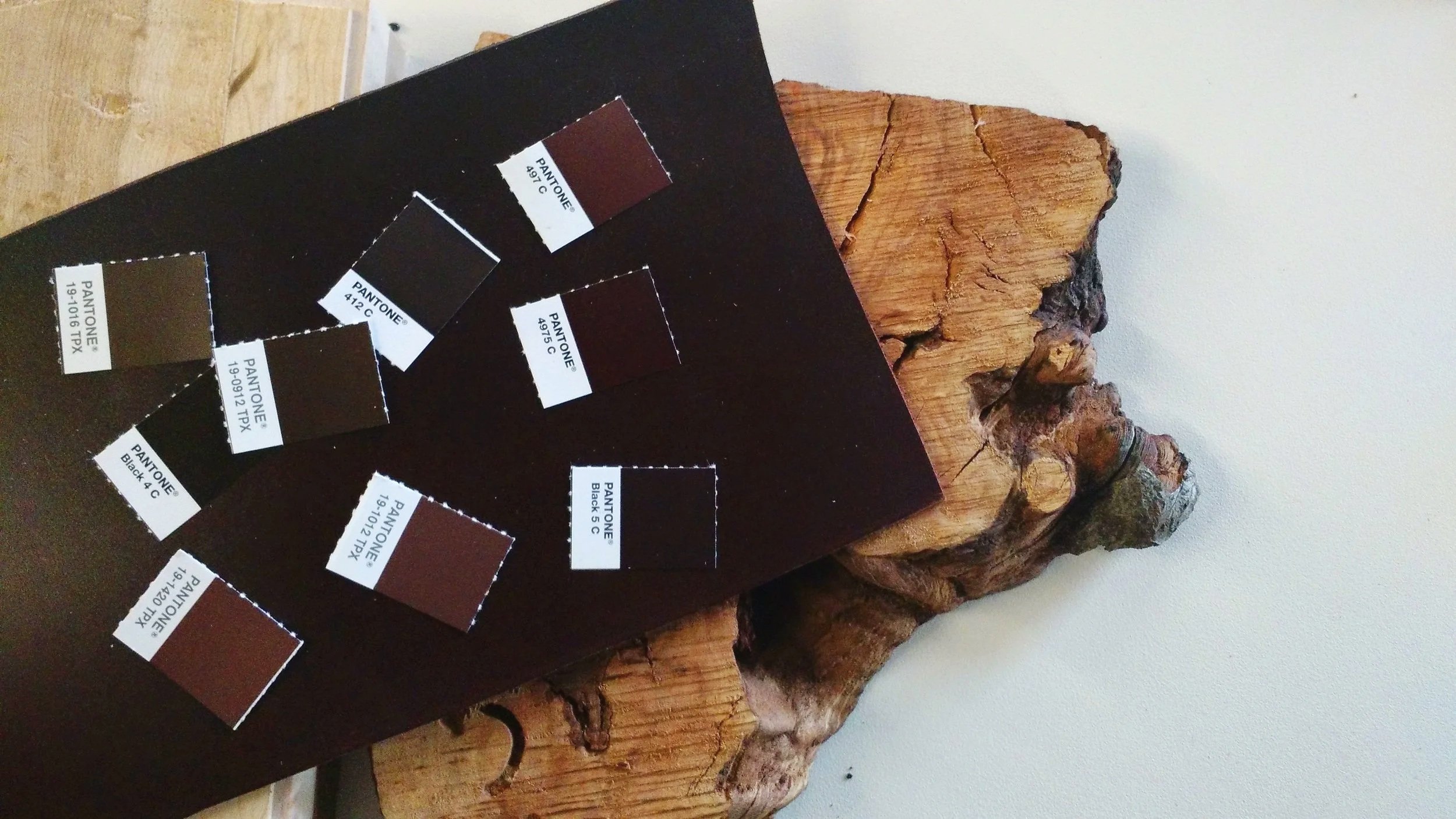
(left) Developing color systems that balance brand intent with manufacturing reality.
(right) Translating CMF intent into precise, production-ready documentation.
Maintaining a CMF library as a shared source of truth across teams.
Constraint Translation & Execution
CMF strategy must adapt to process realities. I’ve worked across rapid iterations and long-lead programs that demand early decisions, rigorous validation, and cross-functional alignment.
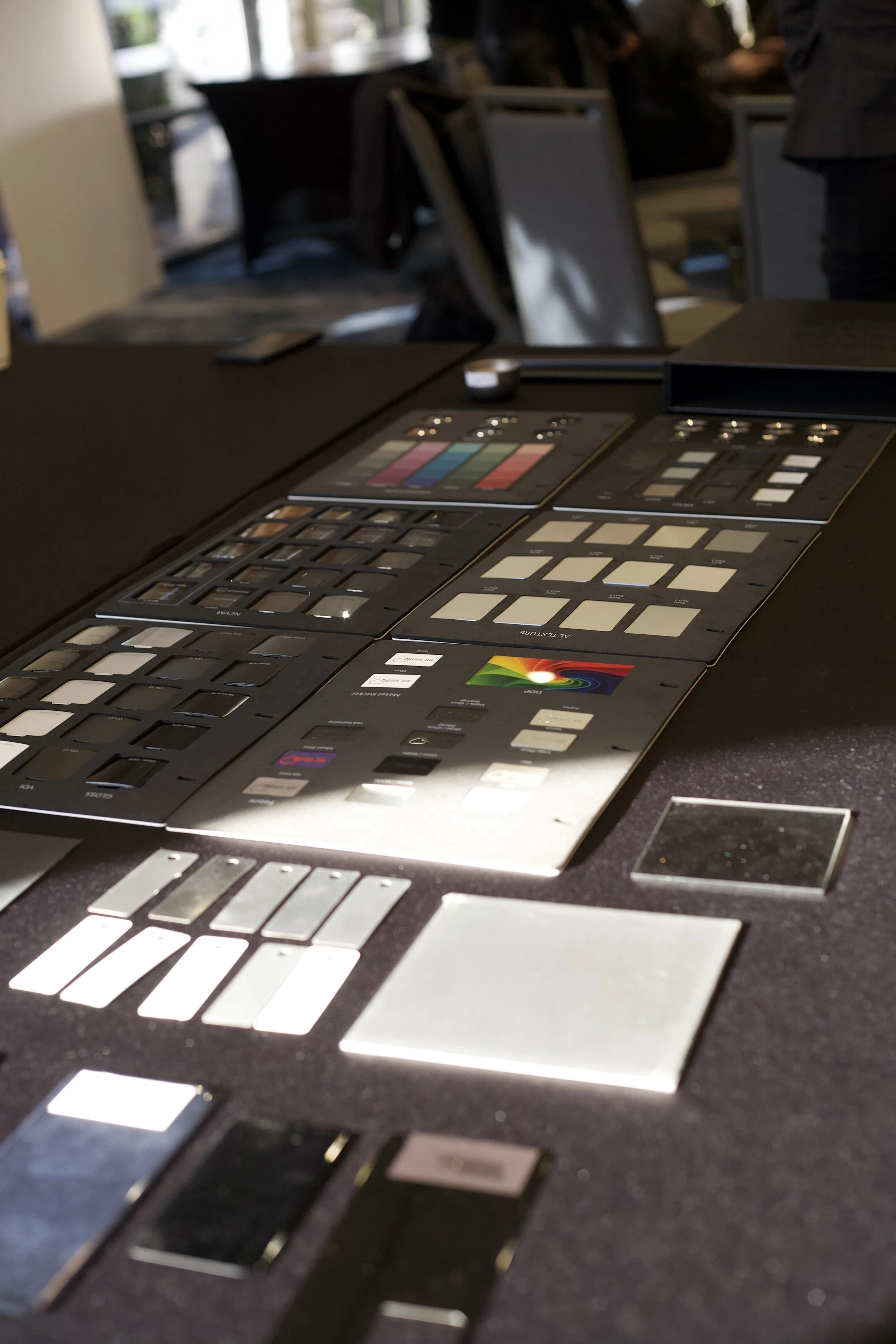
Through prototype reviews, model-making, and manufacturing approvals, we ensure material, color, and finish choices hold up — balancing aesthetic intent with durability, feasibility, and real-world use.
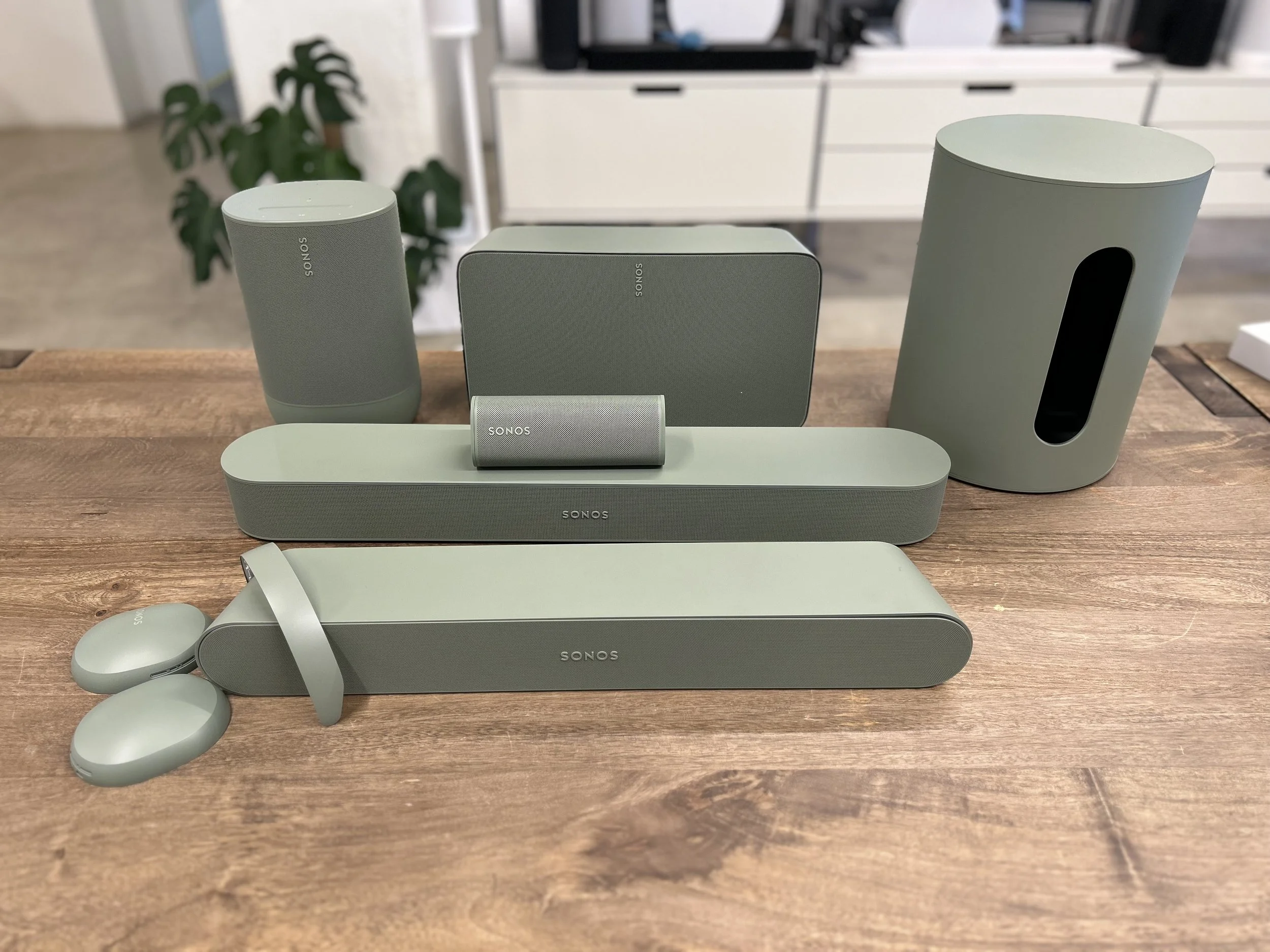
Testing color behavior across lighting conditions and environments.
Evaluating tactility, durability, and finish quality through prototypes.
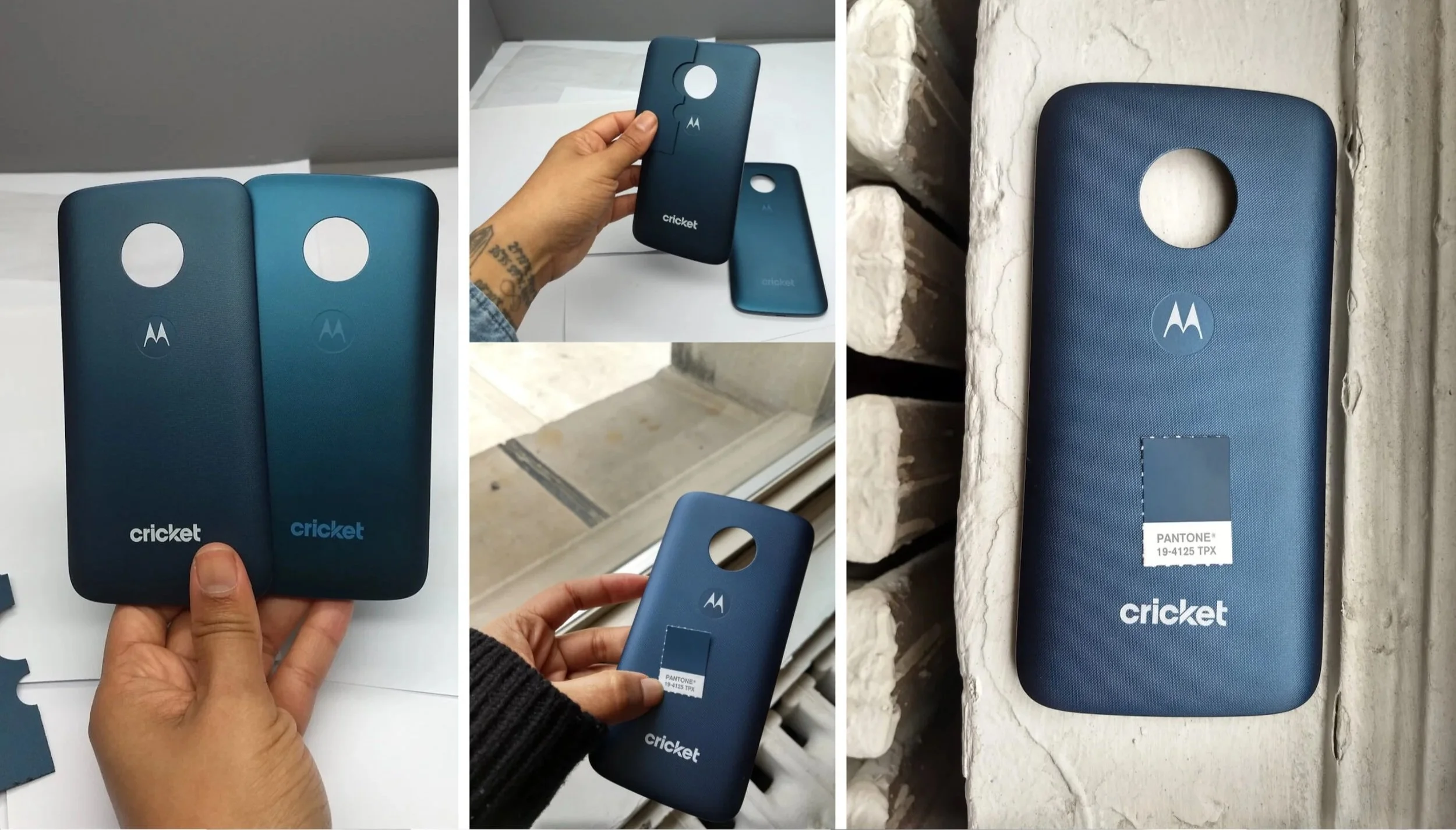
CMF turns design vision into manufacturable, high-quality reality.
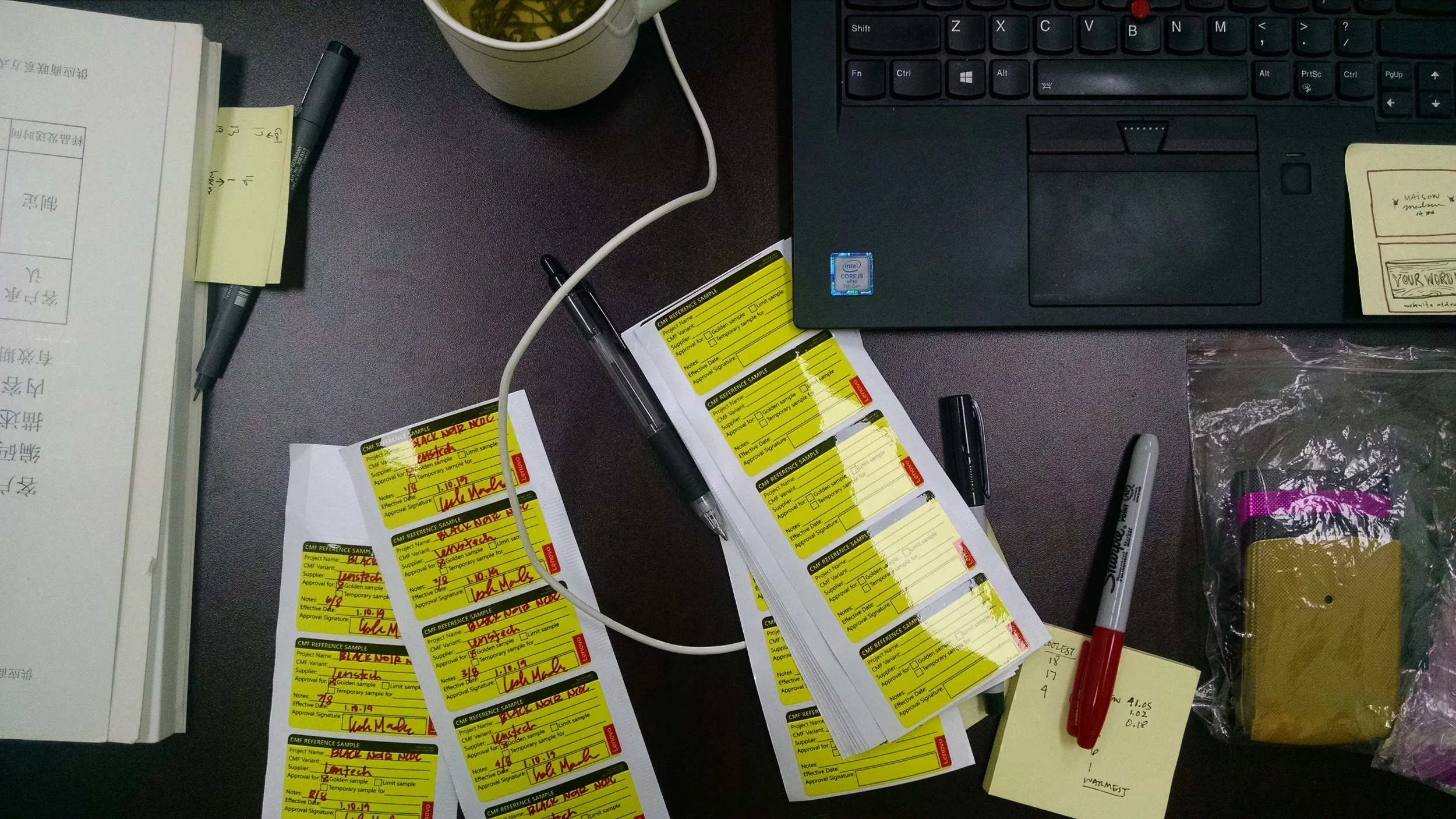
CMF validation through consistency and tolerance checks.
Collaboration, Alignment & Influence
CMF doesn’t succeed in isolation. I lead team workshops, color sessions, and focused sprints to align stakeholders around material strategy, finish intent, and surface application.
These collaborative moments embed CMF thinking across disciplines, enabling teams to make informed decisions as projects evolve, scale, or shift constraints.
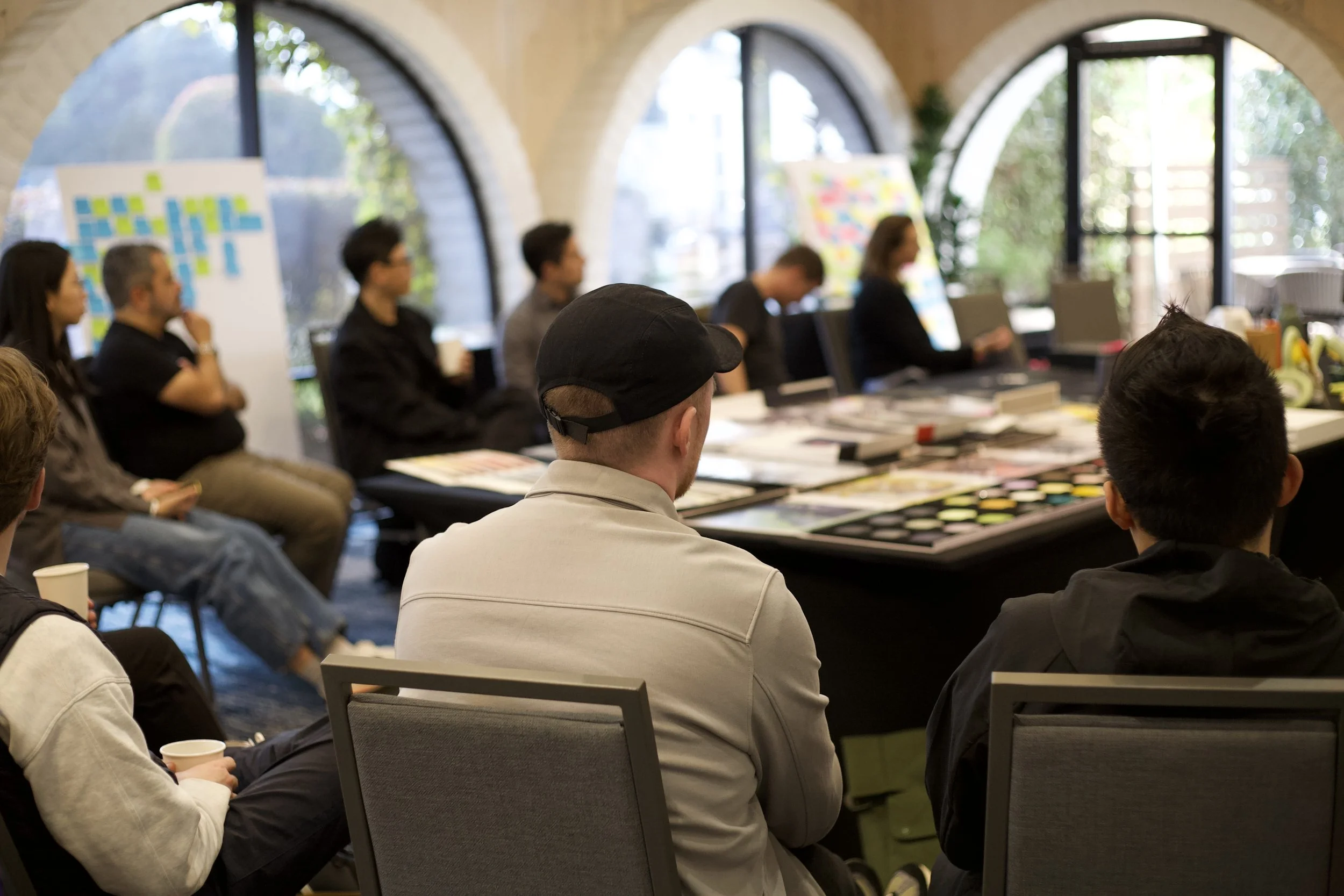
Hands-on workshops align CMF intent across teams.
Workshops and focused explorations help align CMF intent with broader design and production goals.
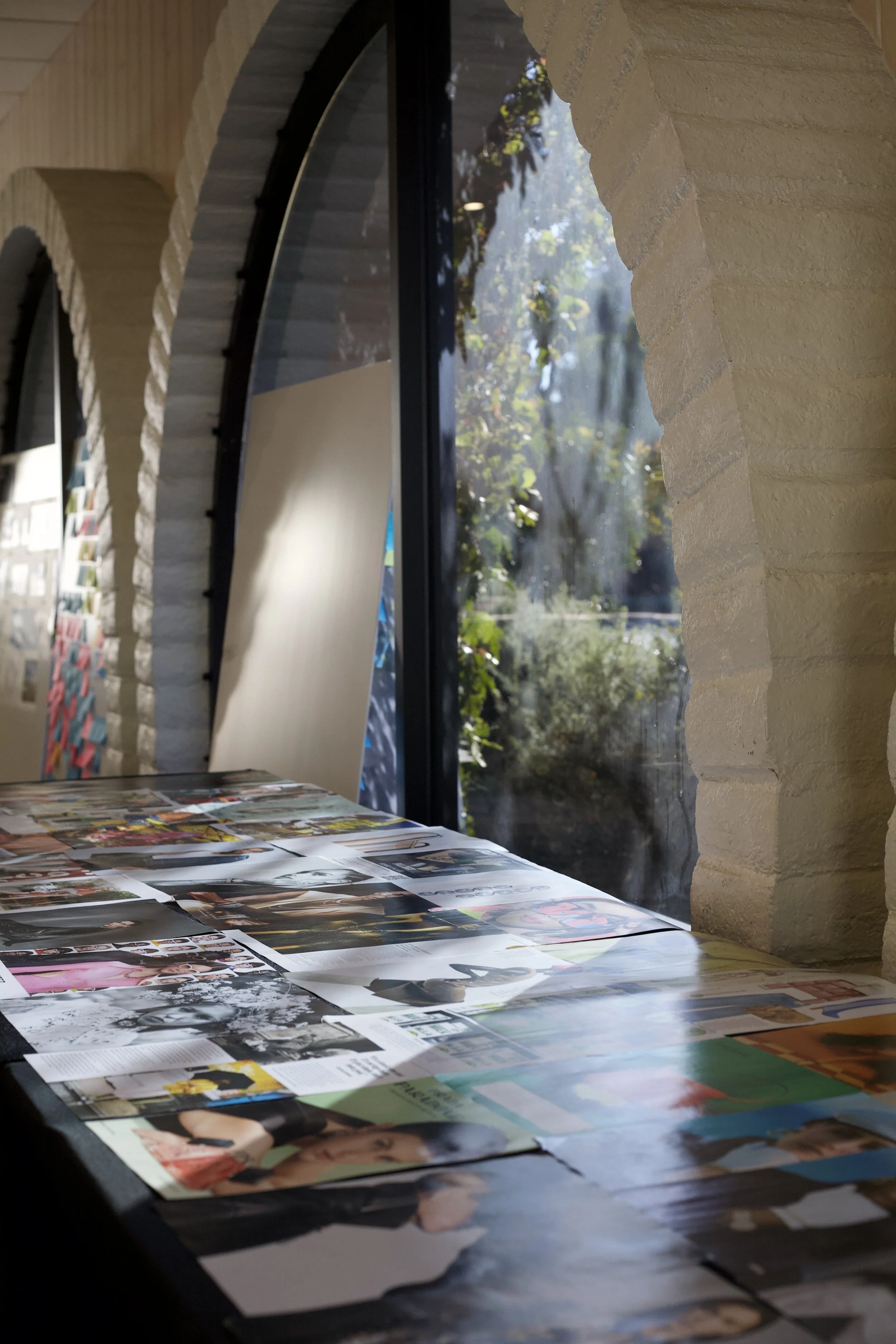
.Focused sprints rapidly explore complex CMF challenges.
Real-World Expression & Validation
Seeing CMF decisions realized closes the loop between strategy and experience. From press launch environments to in-market execution, these moments validate material behavior, surface quality, and color performance in real conditions.
This feedback informs future programs, reinforcing CMF systems that evolve without losing coherence.


CMF strategy supporting clarity and storytelling in high-visibility environments.
Seeing materials and finishes in use validates both the strategy and how it translates to real experiences.
Reflection
CMF is about systems, clarity, and human experience — my role is to guide thoughtful decisions that resonate over time.
Working across products, environments, and systems has shaped how I view CMF — not as surface styling, but as a discipline grounded in constraints, scale, and human interaction. While form factors change, fundamentals remain: durability, clarity, trust, and alignment.
My focus is on applying CMF judgment in ways that adapt to new platforms and processes — scaling material intelligence, documentation rigor, and human-centered thinking into future mobility experiences.