Moto Experience Space
Brand Experience, Spatial CMF & System Design
CMF Lead — Retail & Brand Environment / 2015
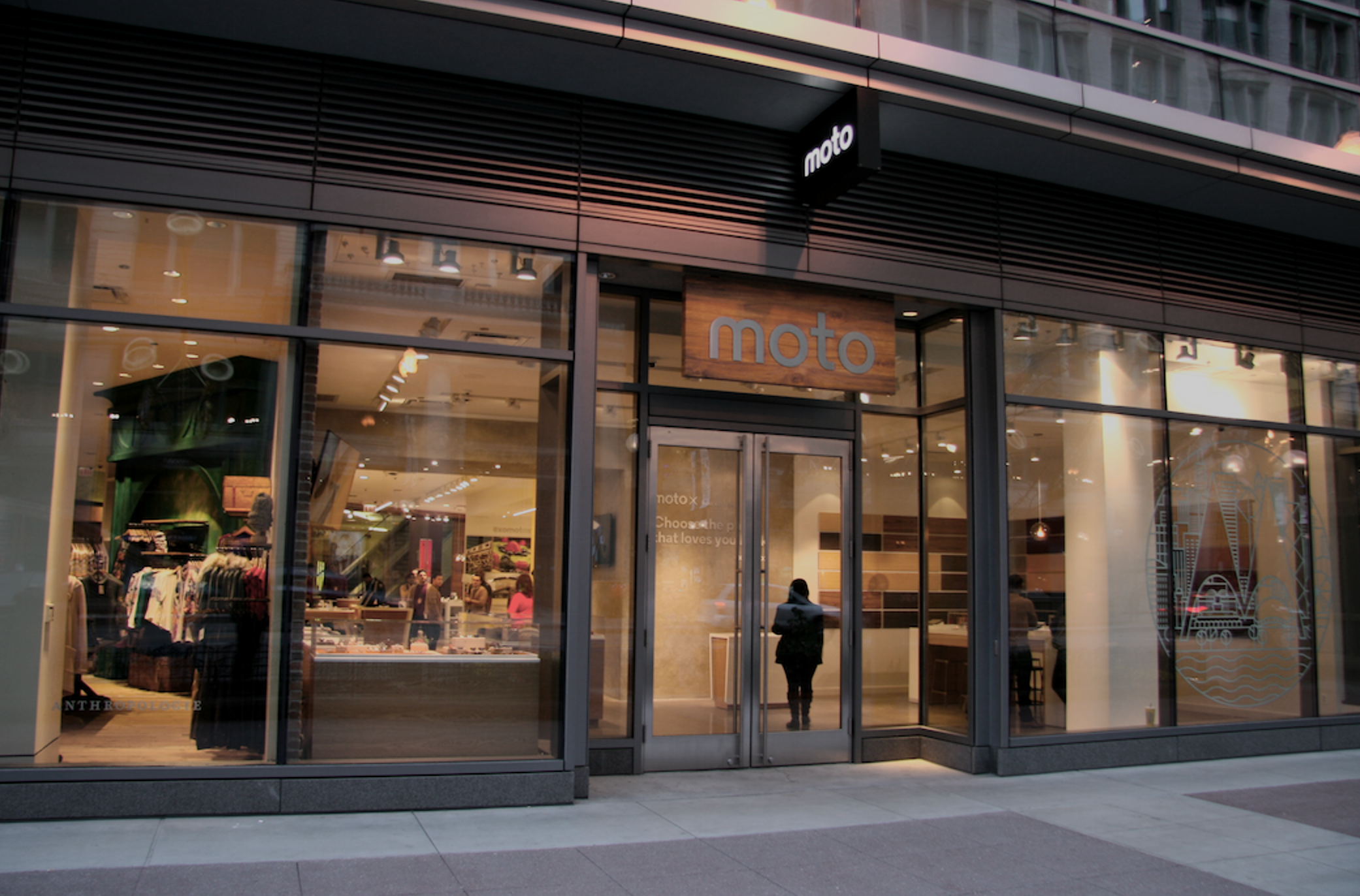
The store in use — materials, color, and openness working together to invite entry and exploration without instruction.
The Moto Experience Store explores how material, color, and restraint shape engagement in a retail environment. As Lead CMF Designer, I was accountable for translating Moto’s design values into a physical experience — from first impressions to moments of pause, interaction, and personalization. Every choice — from the warm wood wall to subtle accent colors — was guided by intention, ensuring the environment felt approachable, clear, and distinctly Moto.
Good retail design doesn’t announce itself — it invites people in and lets them choose how to engage.
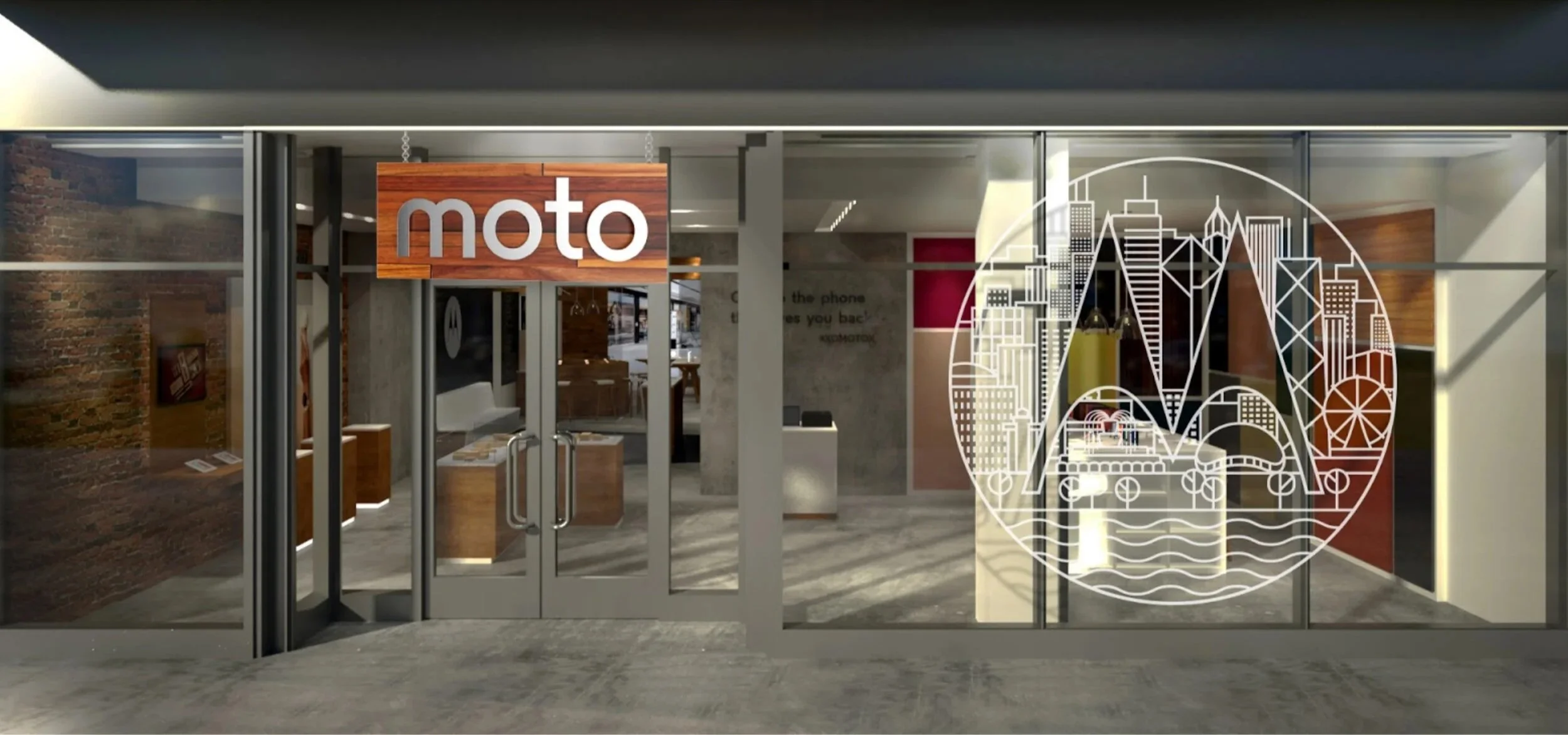
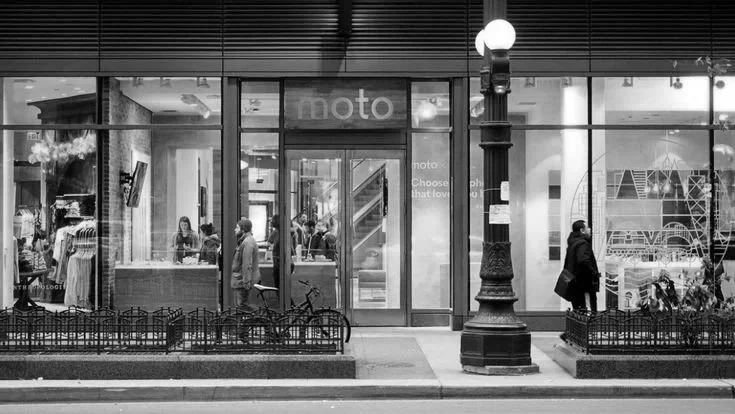
Early facade studies focused on transparency and restraint — signaling approachability while maintaining a clear brand presence.
The storefront and entry sequence were designed to invite exploration without instruction. Transparency, material contrast, and sightlines signal approachability while maintaining brand clarity. This first impression establishes trust and sets the tone for the experience inside.

Material contrast and sightlines create a clear threshold from mall to store.
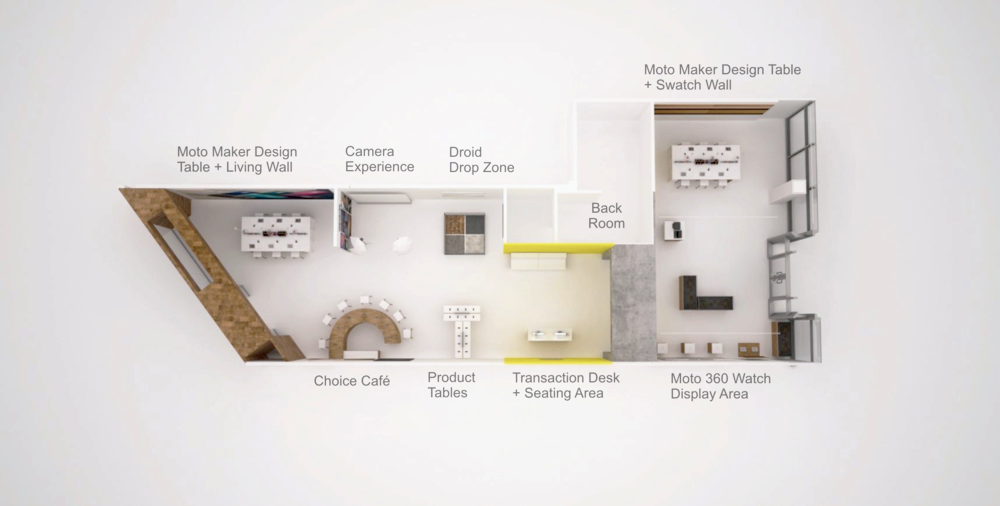
Spatial layout organizes circulation, display, and interaction while maintaining flexibility.
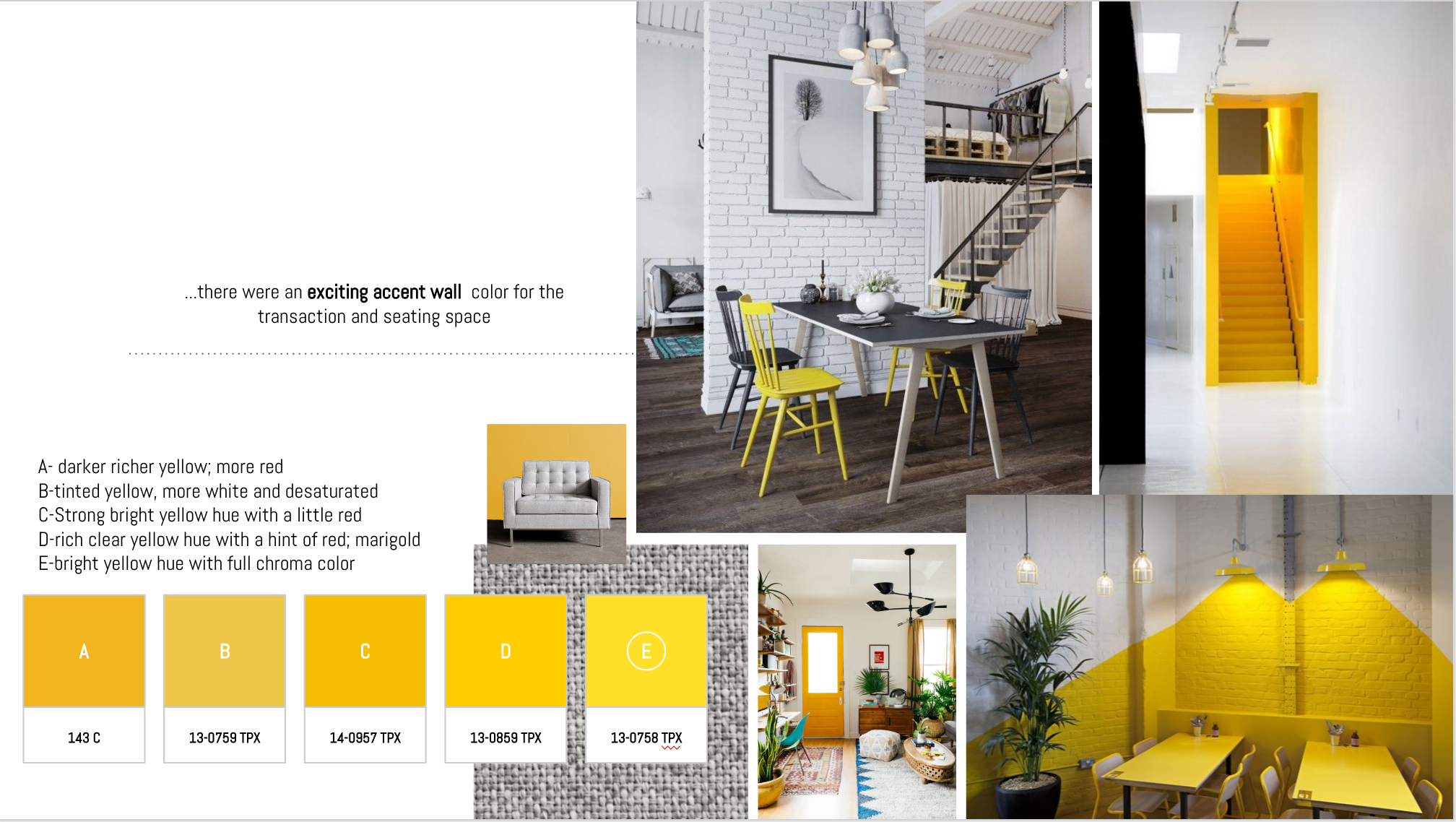
Within the store, material and color define zones of interaction. The seating and engagement area uses color to encourage dwell time, supporting conversation and a sense of pause. Spatial planning ensures circulation is intuitive, guiding visitors through the store without signage, while leaving room for exploration and discovery.
Color supports dwell time and conversation in the seating area.
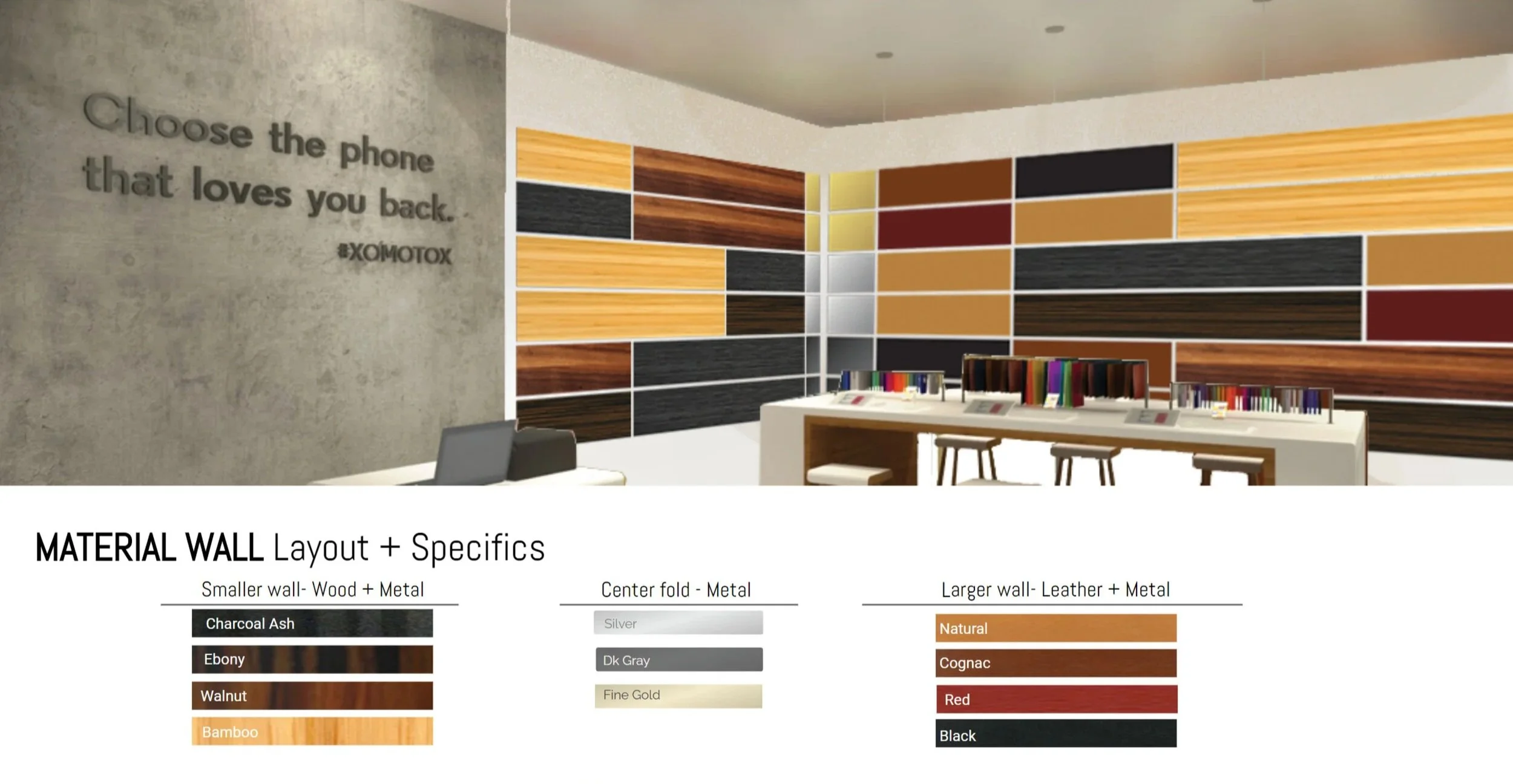

The wood wall anchors the customization area, inviting touch and interaction.
Material strategy translated directly into built form — maintaining proportion, finish, and tactile quality.
The wood wall introduces warmth and tactility, anchoring the customization experience. Materials were carefully chosen to balance technical precision with human approachability. The Moto 360 wall combines brand storytelling with product display — the imagery supports interaction without overpowering the tactile experience.
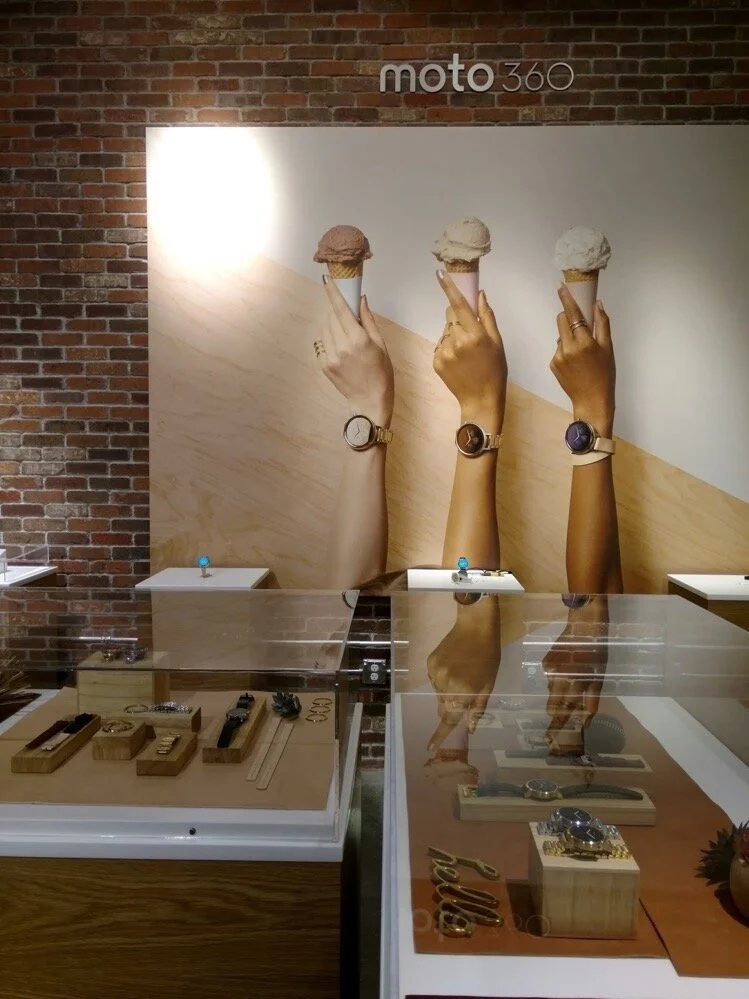
Marketing imagery and product display coexist intentionally to enhance storytelling.
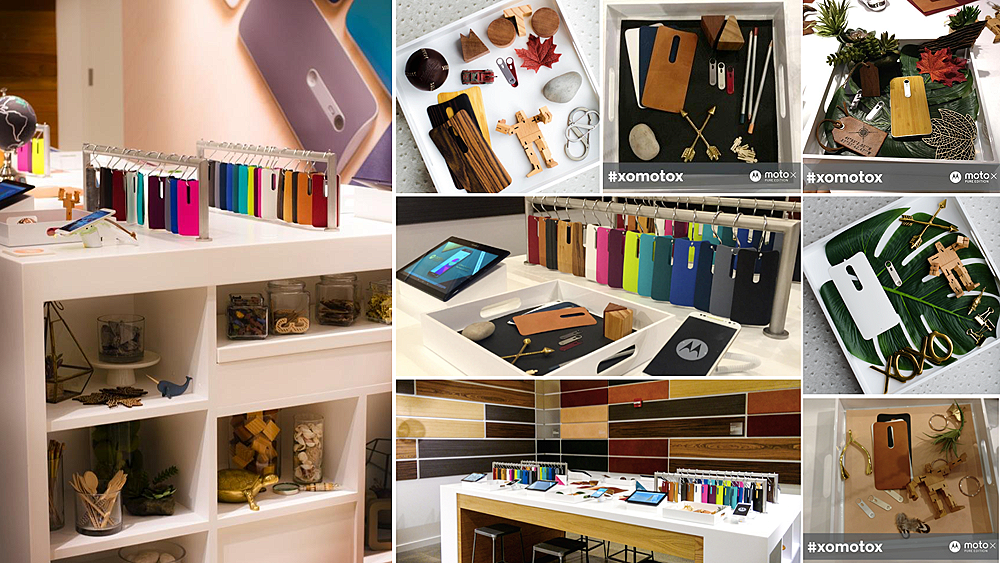
Small-scale interactions create tactile and visual richness within the environment.
Close-range interactions and curated materials reinforce the perception of quality and care. Small details — from finishes to display accessories — support the overall narrative, creating moments that feel considered and intentional.
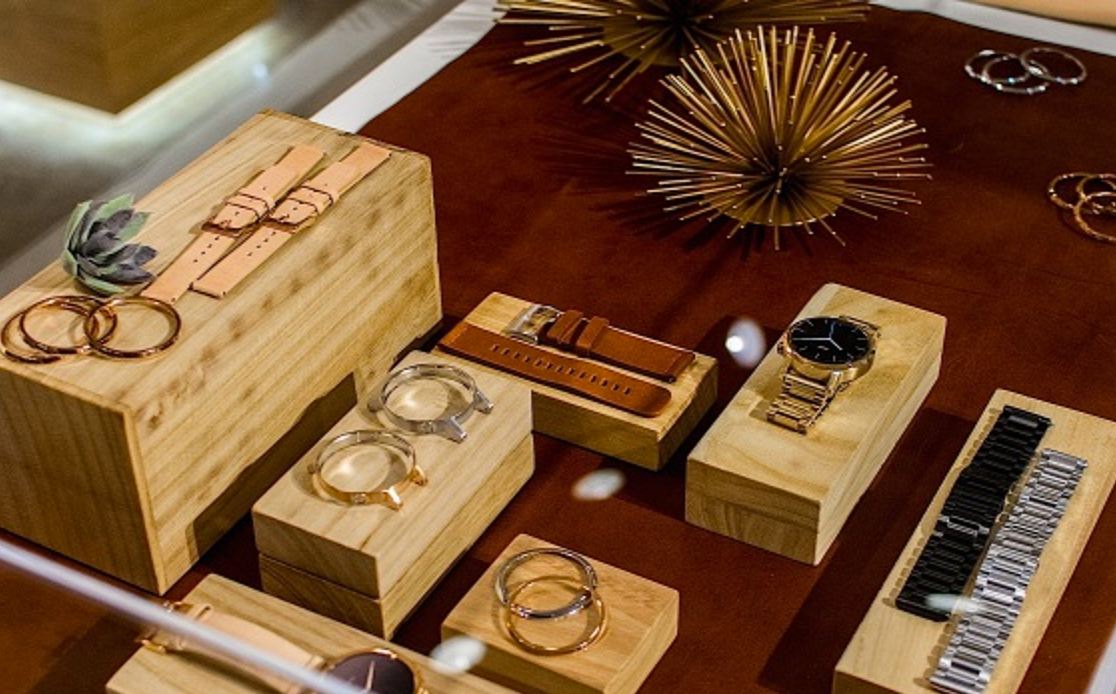
Product detail and display reinforce brand quality and design intent.

(Left photo)
Open concept from front windows to interior displays.
(right photo)
Mall side entrance highlighting the hands experience.
Seeing the space in use validated the CMF framework. Materials held up under traffic, color supported comfort, and spatial cues guided behavior intuitively. The strategy pages provide insight into the framework that guided these decisions — showing how system thinking translated into built form.
The best design decisions often feel effortless — until you realize the thought behind every detail.

Reflection
This project reinforced the value of restraint and intentionality in retail design. When material, color, and texture are used deliberately, the space becomes intuitive — allowing product, people, and brand to coexist naturally. My role was to guide these decisions from strategy to execution, ensuring the experience felt coherent, approachable, and true to the brand.